
How to Choose the Right Kurti for Your Body Type
3 min read
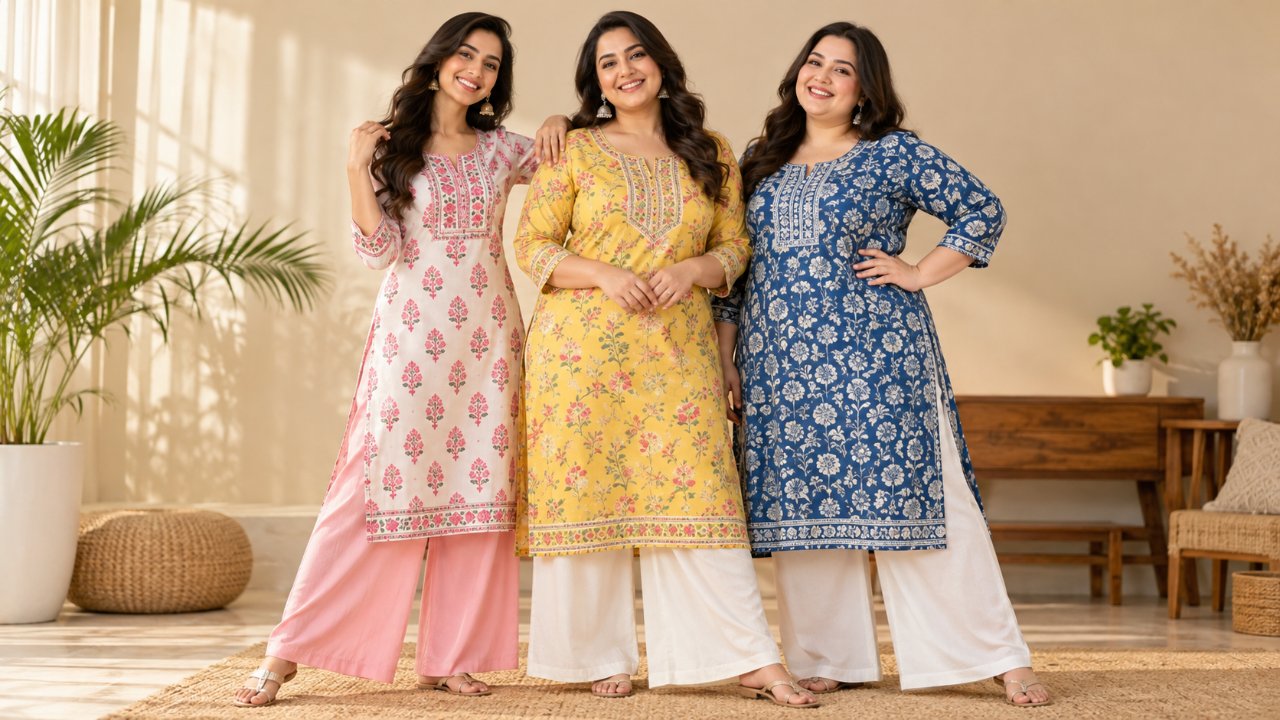
A kurti that fits well makes you feel confident the moment you put it on. The trick is not to follow a trend blindly but to match the cut, length and neckline to your own shape. This guide breaks it down in plain language so you can shop online with confidence.
First, know your shape
Stand in front of a mirror in fitted clothes and compare your shoulders, waist and hips. Most women fall close to one of four shapes:
- Pear: hips are wider than shoulders.
- Apple: fuller around the middle, with slimmer legs.
- Hourglass: shoulders and hips are similar, with a clearly smaller waist.
- Rectangle: shoulders, waist and hips are close in width.
Nobody is a perfect textbook shape, and that is fine. Use these as starting points, not rules.
Kurtis for a pear shape
Draw attention upward and let the hips breathe. Look for embroidered or printed yokes, boat or square necklines and puff or bell sleeves. A-line and flared kurtis skim over the hips instead of clinging. Keep the print busy on top and the bottom half simpler.
Kurtis for an apple shape
Straight or A-line kurtis with a vertical placket or vertical print lengthen the torso. V-necks and long, loose sleeves look balanced. Choose soft, flowy fabrics like rayon and georgette that drape rather than stick, and pair with a slim palazzo or straight pants to show off your legs.
Kurtis for an hourglass shape
Show your waist. Fitted bodices, Anarkali cuts with a defined waistline, and kurtis with a slim belt or tie work beautifully. Avoid very boxy cuts that hide your proportions. Mid-length to knee-length keeps the shape intact.
Kurtis for a rectangle shape
Create curves with detail. Peplum tops, gathers at the waist, flared hems, ruffles and layered sleeves add softness. Colour blocking and horizontal prints at the hem or yoke also help. A fitted churidar or tapered pant keeps the look sharp.
Length matters as much as cut
- Short (above the knee): pairs with jeans, leggings and skirts. Best if you are tall or like a casual look.
- Mid (knee length): the most versatile length. Works with palazzos, pants and leggings.
- Long (calf length and above): elegant and slimming. Good for festive wear and for petite women when worn with a matching bottom.
Fabric choices that flatter
Soft cotton is breathable for daily wear, rayon drapes smoothly, and georgette adds movement for parties. Stiff, thick fabrics can add volume, so if you are conscious of your midsection, choose lighter weights with a good drape. Our fabric guide explains how each one feels and wears.
Get the size right
Even the right cut looks wrong in the wrong size. Measure your bust, waist and hips, then compare them with the garment measurements on the product page rather than trusting the size label. Our kurti size guide shows how to do it in two minutes. If you are between sizes, go one size up for a relaxed fit.
A quick checklist before you buy
- Check the length listed on the product page against a kurti you already own.
- Look at the model note to see the size she is wearing and her height.
- Read the fabric and care details.
- Pick a neckline that suits your face and shoulders.
- Make sure you have a bottom that works with it.
Ready to find yours? Browse our kurtis and kurta sets in sizes S to XXL, and remember you can return or exchange unworn items within 7 days if the fit is not right.
The Online Smart Store Team
A small team of stylists, fabric nerds and everyday-fashion enthusiasts writing about festive looks, fabric care and easy outfit ideas — straight from our studio to your wardrobe.